Pedal Exerciser has quietly become one of the most talked-about tools among fitness people who want a practical and effective way to stay active at home or at work. When I first heard about it, I assumed it was just another tiny gadget, but after using one daily during my work breaks and evenings, I learned what many fitness enthusiasts already understand: a pedal exerciser can add meaningful movement into your day with minimal setup and effort.
Physical activity recommendations from health authorities suggest adults should aim for at least 150 minutes of moderate-intensity activity per week to support heart health and overall fitness. For fitness people who are balancing work, training goals, and other responsibilities, integrating short, productive sessions with a pedal exerciser is not only realistic — it can be transformative.
In this article, we’ll explain what a Pedal Exerciser is, how it works, the real health benefits, who should use it, and how you can incorporate it into your routine — whether your goal is weight loss, improved mobility, active recovery, or daily movement enhancement.
What Is a Pedal Exerciser?
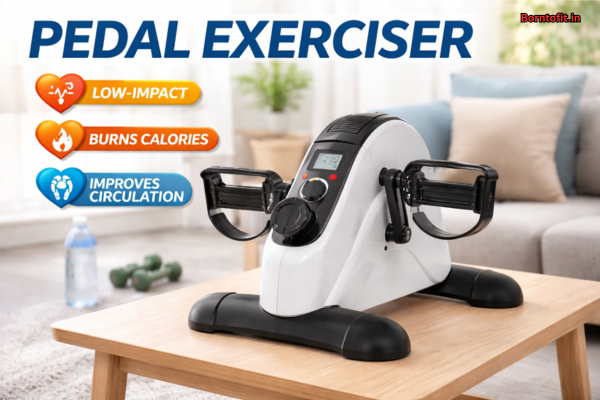
A Pedal Exerciser is a compact, portable exercise device designed to simulate cycling motions with pedals connected to a small rotating mechanism. Unlike a full stationary bike, it is typically used from a chair, couch, or desk. Fitness people use it to work their lower and upper body by pedaling with legs or arms. Mini cycles can be placed either on the floor for lower-body workouts or on a table for upper-body motion.
The simplicity makes it approachable for a wide range of fitness levels, from beginners to experienced exercisers looking to add additional movement on rest days or during sedentary parts of the day.
Top 5 Pedal Exercisers
How Does a Pedal Exerciser Work? Resistance, Motion & Mechanics
At its core, a Pedal Exerciser uses pedals connected to a central wheel with mechanical or magnetic resistance. Here’s how it functions:
- Pedal Motion: When you press down on the pedals, the wheel rotates, creating resistance your muscles must work against.
- Resistance Adjustment: Many models include a tension knob that increases or decreases resistance. Turning the knob tighter makes pedaling harder, while loosening it reduces resistance.
- Mechanics: The system does not require electronic power; the resistance comes from mechanical friction or magnetic tension, depending on the design.
Because the motion mimics the pedaling you’d perform on a bike, your leg muscles — quadriceps, hamstrings, calves, and glutes — are activated in a controlled way, making it easier to maintain a steady, consistent workout. For arm pedaling (tabletop use), it targets shoulder, arm, and upper back muscles.
Top Health Benefits of Using a Pedal Exerciser Daily:
For fitness people who want to maximize every minute of movement, a pedal exerciser offers a long list of valuable benefits:
1. Low-Impact Cardiovascular Exercise
Pedaling elevates your heart rate moderately without putting excessive stress on joints. For adults aiming to meet weekly cardio recommendations, short sessions add up.
2. Improves Circulation and Muscle Endurance
Regular pedaling stimulates blood flow, which is especially beneficial for individuals who sit for extended periods. Better circulation can help prevent stiffness and reduce muscle fatigue.
3. Supports Weight Management
When used consistently, even light cycling contributes to overall calorie burn and metabolic activity. While it’s not a high-intensity workout, the cumulative effect of daily use supports weight goals.
4. Enhances Joint Mobility
Because pedaling is smooth and low stress, it’s often recommended for people with sensitive knees or ankles. It encourages gentle range-of-motion work that can support flexibility and joint comfort.
5. Convenient for Daily Use
One of the biggest advantages fitness people talk about is convenience—pedal exercisers require hardly any space, no setup time, and can be used while reading, working, or watching shows.
Pedal Exerciser for Seniors: Safe Exercise for Mobility & Circulation
Seniors often look for fitness tools that offer real benefits without risk. A Pedal Exerciser is frequently recommended in this case because:
- It is low impact, reducing stress on fragile joints.
- It improves circulation, which is important for older adults.
- It can be used while seated, making it safe and accessible.
Many physical therapists recommend pedaling in rehabilitation and aging populations because it combines motion with comfort. When used consistently, it can help maintain mobility even with limited overall activity.
Using a Pedal Exerciser for Weight Loss & Calorie Burning:
Fitness people with weight-loss goals often think primarily of running or gym cycling — but a pedal exerciser offers a practical alternative or supplement.
Even though pedaling on a mini cycle may burn fewer calories per minute than a high-intensity training session, the real advantage lies in consistency. It’s easy to pedal for longer periods, multiple times a day, especially if you’re working or watching TV. The cumulative effect contributes to overall calorie expenditure, especially when paired with a balanced diet and regular strength training.
Pedal Exerciser for Physiotherapy & Injury Rehabilitation:
For many fitness people recovering from minor injuries or returning from physiotherapy, the controlled, low-impact motion of a pedal exerciser is ideal. Unlike conventional cycling or treadmill work, it doesn’t require standing balance, reducing strain during early recovery phases.
Physical therapists often use pedal exercisers to:
- Improve knee and hip flexibility
- Increase muscle activation safely
- Restore motion range after surgery or injury
Under Desk Pedal Exerciser: Best Option for Office & Work-From-Home Users
One of the fastest-growing use cases for a Pedal Exerciser is under-desk pedaling. Fitness people who work long hours sitting can place the mini cycle under their desk and pedal while working.
Benefits include:
- Continuous movement throughout the day
- Reduced sedentary patterns
- Improved focus through mild physical activity
Studies show that breaking up sedentary time with movement even every 30 minutes improves blood glucose regulation and overall metabolic health.
Arm vs Leg Pedal Exerciser: Upper Body and Lower Body Uses Explained
Although most people think of pedal exercisers for legs, many models allow arm pedaling. Here’s how they differ:
Leg Pedaling:
- Targets quadriceps, hamstrings, calves
- Improves cardiovascular health
- Best for daily movement and calorie burn
Arm Pedaling:
- Targets shoulders, arms, and upper back
- Great for upper-body mobility and endurance
- Helpful during rehabilitation or when lower-body movement is limited
Whether you use it for legs or arms depends on your goals—but both methods add value to your fitness routine.
Who Should Use a Pedal Exerciser? Ideal Users & Fitness Levels
A Pedal Exerciser is useful for a wide range of people, including:
- Beginners: Start with gentle movement and build up time.
- Busy professionals: Use under your desk while working.
- Seniors: Low-impact motion supports joint comfort.
- Rehabilitation clients: Controlled pedaling aids recovery.
- Fitness enthusiasts: Use it for warm-ups, cool-downs, or active rest.
It is not designed to replace intensive training tools, but as a consistent tool that supplements daily activity and supports a balanced routine.
How to Choose the Best Pedal Exerciser: Key Features to Look For
When selecting a pedal exerciser, consider these features:
1. Adjustable Resistance
Allows you to make workouts easier or harder depending on your fitness level.
2. Stable Design
Look for non-slip feet or rubber pads to prevent movement during use.
3. Display Monitor
Shows useful metrics like time, pedal count, and speed to help track progress.
4. Portability
Lightweight and compact builds are best for home and office use.
5. Comfort & Safety
Pedals with straps and ergonomic build increase safety, especially during longer sessions.
FAQs – Pedal Exerciser
Q1: Is a pedal exerciser good for weight loss?
👉Yes, when used consistently it contributes to calorie burn especially when part of an overall active lifestyle.
Q2: How long should I use it daily?
👉Many fitness people start with 10–20 minutes and gradually increase to 30–45 minutes.
Q3: Can I use it while working?
👉Yes! Under-desk pedaling is one of the most practical ways to integrate movement.
Q4: Is it suitable for seniors?
👉Yes — its low-impact design makes it safe and beneficial for many older adults.
Q5: Does it help with muscle strength?
👉It improves muscular endurance and circulation, which supports overall fitness, though it’s not a replacement for heavy strength training.
Conclusion
A Pedal Exerciser offers an easy-to-use, versatile solution for fitness people who want to stay active, burn calories, support mobility, and improve circulation without needing bulky equipment. Whether your goals include weight loss, rehabilitation, under-desk movement, or simply adding more activity to your day, this compact tool fits a wide range of needs. With its low-impact motion, adjustable resistance, and simple design, many fitness enthusiasts find it easier to stay consistent compared to traditional workouts.
So, are you ready to pedal your way to better daily movement and improved fitness?