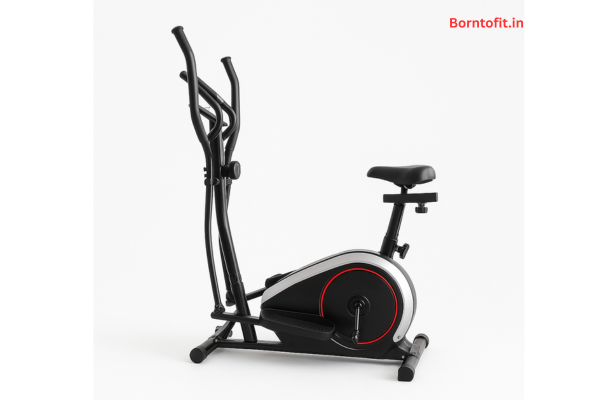
When Ananya moved to Puducherry for her new job, she brought along a Durafit Elliptical Cross Trainer. At first, she used it just for short cardio bursts—10 minutes here, 15 minutes there. But she felt something was missing: she wasn’t getting a full-body burn, and some days she questioned if she was using it “right.” One evening, she messaged me, asking if she could really build strength and tone arms, legs, and core—all with that one machine. So, I sat down with her and sketched out a complete plan.
Over the next months, she saw visible gains all over: more toned legs, firmer arms, better posture. She told me, “I wish I had seen the blueprint from the start.” That’s why I’m writing this for readers who want to know how to use Durafit Elliptical Cross Trainer for an effective full-body workout—so you get the full plan from the first stroke.
Understanding the Durafit Elliptical Cross Trainer:
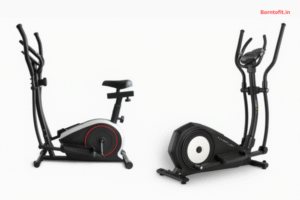
The Durafit Elliptical Cross Trainer is a “cross-trainer” type machine: it uses foot pedals moving in an elliptical (oval) motion, plus moving handlebars, allowing you to push and pull with your arms. This dual movement engages upper and lower body muscles together, giving you a full-body workout. (Cross trainers are in fact a kind of elliptical designed for full-body action.)
Elliptical machines are celebrated for being low impact while still fairly effective in calorie burn. For example, a 30-minute session can burn around 270–400 calories depending on your weight and effort level. Because your feet never leave the pedals, stress on knees, hips, and ankles is minimized—making it ideal for many users.
Because the elliptical is weight-bearing (you’re standing against gravity), it also contributes to bone and skeletal strength more than, say, cycling. But note: its main effect is cardiovascular endurance and muscular tone, not hypertrophy (i.e. big muscle gains).
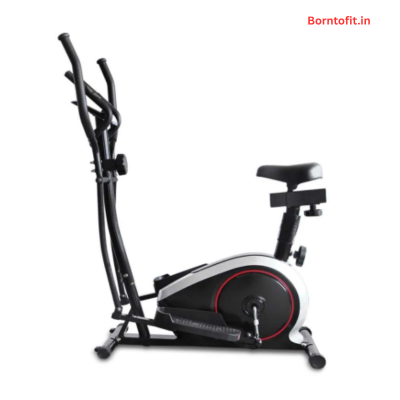
🔗Buy on Amazon
Price Range in India: ₹16,099 – ₹17,599
Setting Up Your Durafit Elliptical Correctly:
First things first: make sure your machine is placed on stable, level flooring with enough clearance around it (at least 2 feet behind and to the sides). Ensure the power cable is safe and you have easy access to controls.
Steps to initial setup:
- Foot positioning: Step onto the pedals carefully, one foot at a time, holding the stationary handles or rail for balance.
- Height and stride: The Durafit model likely has a fixed stride, but make sure your knees are slightly bent at the lowest point—not locked straight.
- Handle grip: Place your hands on the moveable handlebars initially. Many ellipticals also have stationary handles or heart rate sensors—use them as needed.
- Console activation: Turn it on, set date/time, and check the built-in display (we’ll use that later to track metrics).
If your model offers inclination or adjustable stride length, set them to a moderate starting point so motion feels natural.
Proper Posture and Body Alignment:
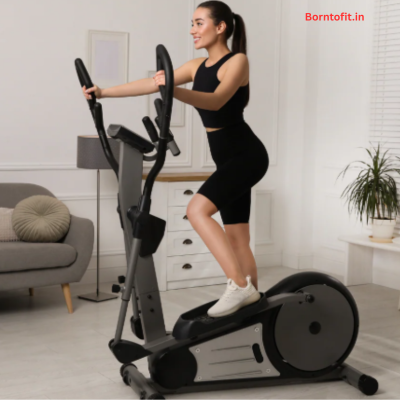
Correct form is crucial. Here’s how to maintain posture:
- Stand upright: Keep your torso tall, spine neutral, shoulders relaxed, gaze forward. Don’t lean heavily onto the handlebars.
- Core engaged: Activate your abdominal muscles to provide stability and prevent slouching.
- Even weight distribution: Don’t shift all weight onto the forefoot; keep your entire foot (heel to toe) in contact with the pedal surfaces as much as possible.
- Arm drive: Push and pull the handle bars with steady, controlled movements. Don’t yank or swing aggressively.
- Knee alignment: Track your knees in line over your feet; avoid inward collapse.
Many users fall into the habit of letting the machine “carry” them. Resist that—you want to drive the motion, not passively follow it.
Warm-Up and Cool-Down Essentials:
Before pushing intensity, always warm up:
- Warm-up (5–10 min): Start on low resistance, pedaling gently. Let your body gradually adapt. Use bidirectional pedaling (forward and backward) for balanced muscle activation.
- Dynamic stretches: Bodyweight leg swings, arm circles, hip openers before you mount (off-machine) help loosen joints.
After your workout:
- Cool-down (5–8 min): Gradually reduce resistance and slow the pace.
- Static stretches: Focus on calves, hamstrings, quads, hip flexors, chest, back, arms. Hold each for 20–30 seconds.
This helps flush out lactic acid, reduce muscle stiffness, and improve flexibility.
Full-Body Workout Technique on the Elliptical:
Here’s how to maximize full-body engagement:
- Synchronized motion: Push your foot down and back, and then pull it up and forward—like a continuous loop. Simultaneously push the handle forward with one arm while the other pulls back.
- Reverse pedaling: Pedaling backward recruits the hamstrings and glutes more, offsetting quad dominance. Alternate forward and reverse within a session.
- Arm emphasis: Occasionally, focus slightly more on arms by slightly slowing your legs and increasing your upper-body effort—without compromising posture.
- Intervals vs steady state: Combine high-intensity bursts (30–60 sec) with lower-intensity recovery periods to spike your heart rate and improve VO₂ capacity.
If you alternate between forward and reverse, add a few intervals per session, and keep posture tight, this becomes a true full-body workout.
Adjusting Resistance and Intensity Levels:
Resistance and speed are your primary levers for intensity:
- Low resistance, high speed: emphasizes cardio, stamina, calorie burn.
- High resistance, slower pace: increases muscular demand, enhances strength and endurance.
A good rule: choose a resistance where you can sustain for 1–2 minutes with effort but still controlled movement.
You can also use interval training:
- Example HIIT pattern: 1 min at high resistance + fast pace, followed by 1 min recovery (low resistance, slow pace). Repeat for 10–15 cycles.
- Or use pyramids: start low, build to max, then descend.
Use the console to monitor metrics like heart rate, RPM (rotations per minute), time, distance, and calories.
Best Elliptical Cross Trainer for Full Body Workouts
Workout Routines for Different Fitness Goals:
Here are sample routines tailored for specific goals:
| Goal | Sample Session | Notes |
|---|---|---|
| Fat/Belly fat loss | 5 min warm-up → 25 min alternating HIIT (1 min high / 1 min moderate) → 5 min cool-down | A Harvard-based study suggests 30-minute elliptical burn ~278-350 cal, useful for weight loss when combined with diet |
| Endurance / stamina | 5 min warm-up → 35 min steady state moderate resistance → 5 min cool-down | Maintain heart rate at ~60–70% max |
| Muscular tone / strength | 5 min warm-up → 20 min high resistance, slower pace → 5 min medium pace → 5 min cool-down | Use reverse pedaling to hit hamstrings, glutes |
| Recovery / active rest | 5 min warm-up → 15 min low resistance slow pace → 5 min cool-down | Very light session to flush out legs |
Tracking Progress with Built-In Display & Metrics:
One strength of modern ellipticals is the console. Use it to monitor:
- Time, distance, calories burned
- Heart rate (via sensors or external strap)
- Stride rate or RPM
- Incline or resistance level
Track your progress week to week: note if you are doing the same workout at a higher resistance or faster RPM. That indicates improved fitness.
Set goals—e.g. “30 minutes at resistance 8 without losing form,” or a target calorie burn. Log your sessions.
Also, occasionally test “baseline” performance—say, a 20-minute steady ride—and track how your speed or heart rate changes over weeks.
Home Gym Equipment for Cardio Workouts
Common Mistakes to Avoid While Using the Elliptical:
- Letting posture sag or leaning on the handlebars
- Neglecting the arms—only pedaling, not pushing/pulling
- Using too low resistance (“coasting mode”)
- Overstriding or reaching for the handles
- Doing the same routine daily (leading to plateaus)
- Ignoring warm-up / cool-down phases
- Wearing improper footwear (slippery shoes)
- Not keeping the machine maintained (loose bolts, worn pedals)
Avoiding these keeps your workouts safe, effective, and sustainable.
Maintenance Tips for Long-Lasting Performance:
To ensure your Durafit Elliptical Cross Trainer remains in top shape:
- Daily wipe-down: Use a soft cloth to wipe sweat off rails, handles, console.
- Weekly check: Inspect bolts, screws, pedals; tighten if needed.
- Lubrication: If the manufacturer recommends, apply silicone lubricant to rails or joints.
- Check belts & cables: Look for fraying or wear; replace parts as needed.
- Keep it level: Use leveling feet or mats so the unit doesn’t wobble.
- Avoid overloading: Don’t exceed the weight capacity plus don’t jerk abruptly in high resistance.
A well-maintained machine is safer, quieter, and lasts longer—so your investment carries on.
FAQs — Durafit Elliptical Cross Trainer
Q1: Can I build muscle mass with it?
👉Not significantly. Ellipticals target endurance and calorie burn. For hypertrophy, include resistance training.
Q2: How often should I use it?
👉Aim for 3–5 sessions per week, each 20–45 minutes, depending on your fitness level.
Q3: Should I pedal backward or forward?
👉Use both. Forward targets quads/glutes; backward gives extra work to hamstrings and glutes.
Q4: Is it better than running or cycling?
👉It’s lower impact than running (less joint stress) and more upper-body engagement than cycling. But each has pros.
Q5: What resistance should beginner start with?
👉Begin at a moderate resistance where you feel challenged but can maintain control, then gradually increase.
Q6: Does using handlebars increase calorie burn?
👉Yes, using the handlebars can boost your calorie burn modestly by engaging more muscles.
Conclusion:
Durafit Elliptical Cross Trainer provides a versatile, joint-friendly platform to deliver true full-body workouts—if used correctly. By understanding the machine’s mechanics, setting it up well, maintaining proper posture, and structuring your routines with variation, you can maximize every session. At Borntofit, we help readers just like you with step-by-step workout templates, technique tips, and progress tracking ideas for the Durafit Elliptical Cross Trainer. Whether your goal is fat loss, endurance, or toning, with consistency and the right approach, your elliptical sessions can become a cornerstone of your fitness journey.
Ready to take the first ride and see what your body can do?