When fitness enthusiasts talk about upping their cardio game, the phrase “spin bike” comes up more often than you might expect. A spin bike isn’t just another exercise machine—it’s a tool that delivers serious results when used correctly. According to recent research, a standard indoor-cycling session can burn between 400 and 600 calories in 45 minutes for the average person. On top of that, indoor cycling has been shown to improve aerobic capacity, lipid profile and body composition in controlled studies. So if you’re someone who’s always on the lookout for efficient, powerful workouts—this is for you.
What Is a Spin Bike? Key Features That Make It Different from Regular Exercise Bikes
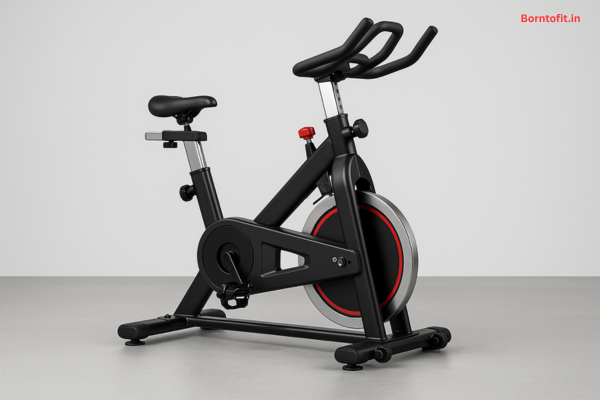
A spin bike is a stationary indoor cycle built with performance in mind. Unlike standard upright exercise bikes, it often features a heavy flywheel, adjustable resistance, and a riding posture that mimics a road-bike setup—sometimes leaning forward on handlebars, sometimes standing up for climbs. This setup makes your workout more dynamic and engaging. One of the key differences: many spin bikes give you the option to stand, sprint, climb—versus a basic upright where you stay seated and it’s more of a casual ride.
Other distinguishing features:
- A heavy flywheel gives the ride inertia so you feel momentum as you pedal.
- Resistance knob or magnetic adjustment to control how hard you’re working.
- Often no built-in fan or fancy accessories—just you, the machine, and your effort.
- Positioned for groups or studio style, but many models now suit home use.
Because you’re able to adjust the resistance and engage more muscle groups—including glutes, hamstrings, quads, core and even upper body when you stand—a spin bike delivers a workout that’s more intense and efficient compared to a basic stationary bike.
How a Spin Bike Works: The Science Behind Resistance, Flywheel & Motion
At the heart of a spin bike is the flywheel. When you pedal, the flywheel keeps turning, which means you’re maintaining momentum. It also means when you increase resistance, you’re forcing your muscles to work harder to keep momentum. The heavier the flywheel (and the higher the resistance), the greater the effort required.
From a science-perspective: your body expends energy based on the work done (pedal force × distance × time). On a spin bike, you can increase resistance (force) or cadence (speed of pedaling) to increase work output. Additionally, many modern bikes display power in watts—so you can measure exact output, which ties to energy expenditure (kilojoules ≈ calories) for serious trackers.
When you stand to pedal, you recruit more muscle groups, raise your heart rate, and consequently raise your calorie burn rate more than a seated bend. That’s partly why spin bikes show higher calorie burn numbers compared to typical upright bikes when used intensely.
Spin Bike Benefits: Why Fitness Enthusiasts Swear By It for Home Workouts
For the fitness-minded, a spin bike offers several key advantages:
- High calorie burn in short time: As noted earlier, 45-minute spin sessions often burn 400–600 calories.
- Low impact: Unlike running, your joints take less pounding—ideal for home workouts, for those recovering from injuries, or for avoiding excessive wear and tear.
- Scalable intensity: You can go at your own pace—from light warm-up to full sprint. That makes it good for beginners, intermediates, and advanced fitness fans.
- Time efficient: Because you can push hard, you get big results in shorter sessions—a major plus for busy lifestyles.
- Versatility: You can simulate climbs, sprints, intervals, steady-state—all on one machine.
- Cardio and strength combo: Because resistance matters, you’re building muscular endurance (especially in legs) while boosting cardiovascular fitness.
For someone dedicated to fitness and looking for home-based solutions, the spin bike is a smart choice.
Spin Bike vs Stationary Bike: Which One Should You Choose for Your Fitness Goals?
If you’re deciding between a spin bike and a regular stationary (upright) bike, here are the key comparisons:
- Intensity & calorie burn: Spin bikes generally allow higher intensities and higher calorie burn. For example, upright stationary bikes may burn fewer calories because you’re mostly seated and less muscle groups are engaged.
- Muscle recruitment: On a spin bike you often stand, push harder, engage core/upper body; on an upright you’re seated and the motion is more limited.
- Posture and feel: Upright bikes mimic normal cycling posture but often more relaxed. Spin bikes mimic road bike posture—leaned forward, more aggressive feel.
- Suitability: If you’re just after light cardio, upright might suffice. If you’re training for fitness, fat-loss, or high performance, spin bike is preferable.
- Cost and space: Upright bikes are generally cheaper and more compact; spin bikes vary but many home models are compact enough.
- Comfort vs performance trade-off: Upright bikes may be more comfortable for lounging rides; spin bikes demand more effort, especially if you use them for serious workouts.
If your goal is serious fitness, calorie burn, and efficient workouts, a spin bike is the smarter pick.
How to Set Up a Spin Bike Correctly: Seat Height, Handlebar Position & Posture Tips
To get the most from your spin bike and avoid injury, setup and form are key. Here’s how to dial it in:
- Seat height: When the pedal is at its lowest point, your leg should be almost—but not fully—straight. A slight knee bend (~25-30°) ensures efficient pedaling without locking the knee.
- Seat forward/back: Sit on the saddle, pedal in mid-position (3 o’clock). Your knee should be vertically above the ball of your foot. Adjust the seat fore/aft accordingly.
- Handlebar height: For comfort you can set the handlebar roughly level with your saddle or slightly higher if you have back issues. For a more aggressive posture you might set it lower.
- Posture: Keep your back neutral (straight), shoulders relaxed, core engaged. When standing, keep the weight distributed between the seat and pedals, and use your whole lower body—not just your quads.
- Resistance & cadence: Aim for a cadence (pedaling speed) of ~80-110 RPM when seated flat, and 60-80 when climbing. These ranges are used in indoor cycling training.
- Warm up and cool down: Start easy for ~5–10 minutes, then progress into your main set, then cooldown. Prevents injury and helps performance.
Proper setup not only enhances performance but also reduces the risk of knee, back or hip discomfort, which fitness-focused folks need to avoid.
Types of Spin Bikes Explained: Magnetic, Belt-Drive, Chain-Drive & Smart Bikes
For home use, you’ll encounter several types of spin bikes. Here’s a breakdown:
- Chain-Drive: Traditional mechanism with chain similar to outdoor bikes. You’ll hear the chain, might require more maintenance, but offers a robust ride feel.
- Belt-Drive: Quieter, smoother, lower maintenance. Good choice for apartments or shared spaces.
- Magnetic Resistance: Uses magnets to create resistance. Offers smooth changes, often quieter. Often found in premium models.
- Friction/Manual Resistance: Older style where a pad presses against flywheel. Good budget option but may require maintenance.
- Smart/Connected Spin Bikes: These connect to apps, track power (watts), cadence, heart rate. If you’re serious about fitness tracking, these offer granular insight. The watt and kJ metrics give you an accurate measurement of effort.
Choosing the right type depends on your budget, noise tolerance, maintenance willingness, and how serious your fitness goals are.
Spin Bike Workouts for Beginners to Advanced Riders: A Complete Routine Guide
Here’s a simple progression of routines depending on your level:
- Beginner (20-30 minutes):
- 5 min warm-up (easy resistance)
- 10 min seated moderate resistance (~80 RPM)
- 5 min standing climb (moderate resistance)
- 5 min cooldown
- Intermediate (30-40 minutes):
- 5 min warm-up
- 5 × intervals: 1 min sprint (high RPM, moderate resistance) + 2 min recovery (lower RPM)
- 10 min steady seated climb (increase resistance every 2 minutes)
- 5 min cooldown
- Advanced (45-60 minutes):
- 10 min warm-up with cadence changes
- 10 min seated climb pushing high resistance
- 5 × intervals: 30 sec standing sprint + 90 sec seated recovery
- 10 min rolling hills: alternate 2 min seated, 2 min standing; alter resistance each block
- 5–10 min cooldown
Adjust resistance/cadence to suit your fitness level. Track your power (if available) to measure progress. For fitness-driven riders, variety (intervals, climbs, sprints) is key to keep gains coming.
Calories Burned on a Spin Bike: Real Stats & What Affects Your Burn Rate
For fitness-focused users, knowing how many calories you can burn is important. Here are some real stats:
- One study tracked six subjects during a 40 minute “Spinning®” workout and found they burned 467-617 calories.
- Another source cites that a 45-minute spin session can burn 400-600 calories for an average individual.
- Using a MET‐based calculator, spinning at 40 watts burned about 250–330 calories/hour; at 100 watts the burn jumps to 630-840 calories/hour.
Factors that affect how many calories you burn: your body weight, fitness level, workout intensity, duration, resistance and cadence. Also note: tracking devices/bikes may estimate rather than measure exact energy expenditure.
For fitness folks aiming to drop fat or boost cardio, this means: if you push the intensity and resistance, you’ll burn significantly more calorie per minute than a casual ride.
Common Mistakes to Avoid While Using a Spin Bike (and How to Fix Them)
Because fitness-enthusiasts often push hard, mistakes can cost results or lead to injury. Here are common ones:
- Poor seat/handlebar setup → leads to knee/hip/back strain. Fix: adjust seat height/forward/back as described above.
- Too low resistance → results in high cadence but low muscle engagement; you’ll spin but burn less. Fix: increase resistance so you’re challenged at moderate RPM.
- Too high resistance too soon → might sacrifice form, cause injury or reduce cadence drastically. Fix: gradually increase resistance as you build strength.
- Ignoring posture when standing → leaning too far forward or relying only on upper body. Fix: engage core, keep back neutral, use legs.
- Skipping warm-up/cool-down → increases injury risk and reduces performance. Fix: always include 5-10 minutes warm up and cooldown.
- Riding only seated → misses out on benefits of standing climb. Fix: include standing segments to engage more muscle and increase heart rate.
- Neglecting recovery → overdoing intense rides without recovery can hamper progress. Fix: schedule moderate days or recovery rides.
By avoiding these mistakes, fitness-driven riders can get the most out of their spin bike sessions.
Top 5 Best Spin Bike for Home Workouts
How to Choose the Best Spin Bike for Home Use: Must-Have Features & Budget Guide
When you’re serious about fitness and considering a spin bike for home use, here are features to look for:
Must-Have Features
- Adjustable seat and handlebars (height + fore/aft) for fit.
- Solid heavy flywheel (20 kg+ recommended) for smooth feel.
- Resistance system that allows you to go from moderate to very hard.
- Good build quality and stable frame (important for standing climbs).
- Good pedal system (SPD or toe cage) if you’ll use clip-in shoes.
- Console or connectivity (optional) for tracking power, cadence, heart rate if you’re serious.
- Quiet drive (belt-drive preferred for home/apartment living).
Budget Guide
- Entry level: simple friction or basic resistance spin bikes, great for fitness starters.
- Mid-range: belt-drive, magnetic resistance, better build — suitable for regular fitness users.
- Premium: smart spin bikes with power output, connectivity, dedicated apps and large flywheels — ideal for serious fitness enthusiasts.
As a hardcore fitness person, investing in a good quality spin bike pays off because you’ll use it consistently, track performance, and push intensity. Don’t just buy a cheap one and ignore these features if your goal is real results.
FAQs – Spin Bike
Q1: Does a spin bike help build muscle?
👉Yes—it engages legs, glutes, hamstrings and core especially when resistance is high or when doing standing climbs. Over time, this builds muscular endurance and can support muscle tone.
Q2: How often should I use a spin bike for best fitness results?
👉For fitness demands, 3-5 times per week is a solid range—mixing steady rides, intervals and recovery days. Consistency matters more than just frequency.
Q3: Is spin bike good for weight loss?
👉Absolutely—because of high calorie burn and scalability. Combined with nutrition and recovery, it supports fat loss effectively.
Q4: Can beginners use a spin bike effectively?
👉Yes—spin bikes are adaptable. Start with shorter durations, lower resistance, and build up. Many classes and home routines cater to beginners.
Q5: Do you need shoes with cleats?
👉Not necessarily. Many bikes accept regular sneakers via toe-cages. But if you plan to ride frequently or link to outdoor cycling, clip-in shoes add efficiency.
Conclusion:
For fitness-focused individuals looking for an indoor workout tool that delivers time-efficient, high-intensity results, the spin bike stands out. From understanding what it is, to how it works (flywheel, resistance, motion), to the benefits it offers—improved cardio, high calorie burn, low impact—it ticks many boxes. It also beats a basic upright bike when your goals lean toward performance, fat-loss or serious fitness. With the right setup, good posture, proper resistance, variety in workouts and avoidance of common mistakes, you’ll be leveraging one of the most potent machines in the home gym environment.
If you’re ready to take your home workouts to the next level, isn’t the spin bike the next logical move?