Elliptical Cross Trainer machines have become a staple in gyms and homes alike — but what exactly are they, and why are they so effective for full-body fitness? Imagine this: A busy midday in Erode, you pop into your local gym, and there it is — sleek, gliding, inviting. You step on, grip the handles, and begin a smooth, flowing motion, your arms and legs moving in harmony without that jarring impact of running. That’s the elliptical in action. In fact, many users switch to ellipticals because they combine cardio efficiency and joint protection in one motion. At Borntofit, we’ve worked closely with trainers and equipment designers to help people understand what this machine offers — and how to use it wisely.
Best Air Bikes | Best Treadmills
What Is an Elliptical Cross Trainer?
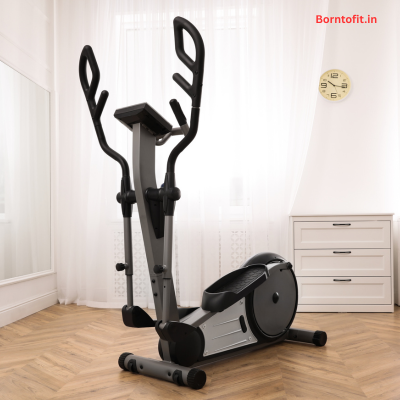
🔗Buy on Amazon
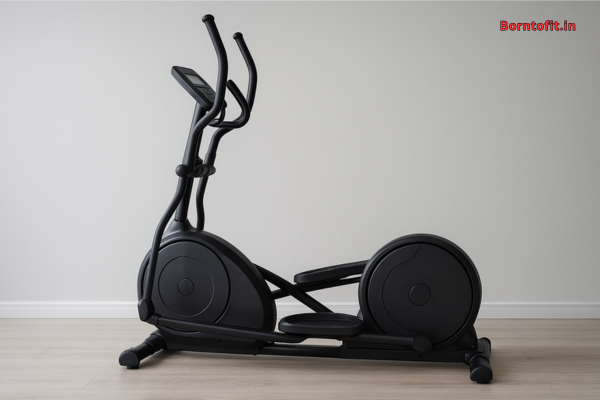
An elliptical cross trainer is a stationary exercise machine that simulates walking, running, and stair climbing without causing excessive pressure to the joints. Unlike treadmills, which can be hard on the knees and hips, elliptical trainers offer a low-impact cardiovascular workout that can vary from light to high intensity based on the user’s speed and resistance preferences.
Types of Elliptical Cross Trainers
Elliptical cross trainers come in various models to cater to different fitness needs:
- Standard Ellipticals: These are the most common, offering basic features suitable for general workouts.
- Front Drive Ellipticals: Known for their longer stride length, these are ideal for users seeking a more natural walking or running motion.
- Rear Drive Ellipticals: These provide a more upright posture and are often quieter during operation.
- Center Drive Ellipticals: Offering a compact design, these are perfect for those with limited space.
Each type offers unique features, so choosing the right one depends on your specific fitness goals and available space.
How an Elliptical Cross Trainer Works
The elliptical cross trainer operates through a system of pedals that move in an elliptical motion, mimicking the natural movement of walking or running. The resistance and incline can be adjusted to increase workout intensity, allowing users to target different muscle groups. The handlebars, if present, engage the upper body, providing a full-body workout that enhances cardiovascular health and muscle endurance.
Full-Body Workout Benefits
One of the standout features of the elliptical cross trainer is its ability to provide a full-body workout. By engaging both the upper and lower body, it helps in:
- Strengthening Muscles: Targets muscles in the legs, arms, and core.
- Improving Cardiovascular Health: Enhances heart and lung capacity.
- Increasing Endurance: Builds stamina over time.
- Burning Calories: Aids in weight management and fat loss.
Benefits of Using an Elliptical Cross Trainer
Regular use of an elliptical cross trainer offers numerous benefits:
- Low-Impact Exercise: Reduces stress on joints, making it suitable for individuals with joint concerns.
- Calorie Burning: Depending on weight and workout intensity, users can burn between 270 to 400 calories in 30 minutes.
- Muscle Toning: Engages multiple muscle groups, leading to improved muscle tone and strength.
- Convenience: Allows for indoor workouts, unaffected by weather conditions.
- Versatility: Suitable for various fitness levels, from beginners to advanced users.
Common Mistakes to Avoid
To maximize the benefits of your elliptical workouts, avoid these common mistakes:
- Incorrect Posture: Maintain an upright posture to prevent back strain.
- Holding the Handrails Too Tightly: This can reduce the effectiveness of the workout.
- Overexertion: Start with moderate intensity and gradually increase as your fitness improves.
- Neglecting Warm-Up and Cool-Down: Always include these to prevent injuries.
Top 10 Home Gym Equipment for Cardio Workouts
Elliptical Cross Trainer vs Other Cardio Machines – Comparison Table
| Features | Elliptical Cross Trainer | Treadmill | Stationary Bike | Rowing Machine |
|---|---|---|---|---|
| Impact on joints | Very low-impact (feet glide, no foot strike) | Moderate to high (footstrike stress) | Low (seated) | Low to moderate (legs push, but motion smoother) |
| Upper-body involvement | Yes (handles) | Limited (usually fixed belts) | Minimal | Strong (arms + back) |
| Caloric burn potential | High (with full-body engagement) | High | Moderate to high | High (full-body) |
| Ease for beginners | Moderate (coordination required) | Easy to adapt | Very easy | Moderate (technique needed) |
| Muscle emphasis | Balanced upper + lower | Emphasis on legs, glutes | Quads, hamstrings, glutes | Back, lats, legs |
| Rehabilitation / joint issues | Very suitable | Less ideal for knees/hips | Suitable | Depends on spinal/back health |
| Space / footprint | Larger footprint, but many compact options | Requires length | Compact | Moderate footprint |
| Versatility (programs, incline, reverse) | High | Moderate to high (incline, speed) | Moderate (resistance levels) | Moderate (resistance, stroke rate) |
| Buy | Buy on Amazon | Buy on Amazon | Buy on Amazon | Buy on Amazon |
Usage Tips: How to Use an Elliptical Cross Trainer Properly
To get the most out of your elliptical workouts:
- Adjust Resistance and Incline: Tailor these settings to your fitness level and goals.
- Use the Handlebars Effectively: Engage your upper body by pushing and pulling the handlebars.
- Maintain Proper Posture: Keep your back straight and avoid leaning forward.
- Vary Your Workouts: Incorporate intervals and different resistance levels to challenge your body.
FAQs – Elliptical Cross Trainer
Q1: Is an elliptical good for weight loss?
👉Yes. Because you engage many muscles and can sustain moderate-to-vigorous cardio, ellipticals can burn significant calories. Many users burn ~270–400 kcal in 30 min depending on weight and intensity.
Q2: Can elliptical replace running?
👉It can substitute cardio work during injury or for lower impact, but because running promotes bone loading, many experts recommend maintaining some impact-based training for bone health.
Q3: How often should I use an elliptical?
👉Aligned with ACSM guidelines, moderate-intensity cardio 5 days/week (30–60 minutes) or vigorous intensity 3 days/week works well.
Q4: Forward or reverse stride — which is better?
👉Both have merit. Forward works quads and glutes; reverse shifts load to hamstrings. Alternating both is ideal.
Q5: Does using the handles really matter?
👉Yes — pushing and pulling with arms increases calorie burn and adds upper-body engagement. Some studies suggest up to ~8% more calorie burn when using handles in certain designs.
Conclusion:
The elliptical cross trainer stands out as a versatile and effective piece of fitness equipment, offering a full-body workout that caters to various fitness levels and goals. Whether you’re aiming to improve cardiovascular health, burn calories, or strengthen muscles, the elliptical provides a comprehensive solution.
So, are you ready to elevate your fitness journey with the elliptical cross trainer?